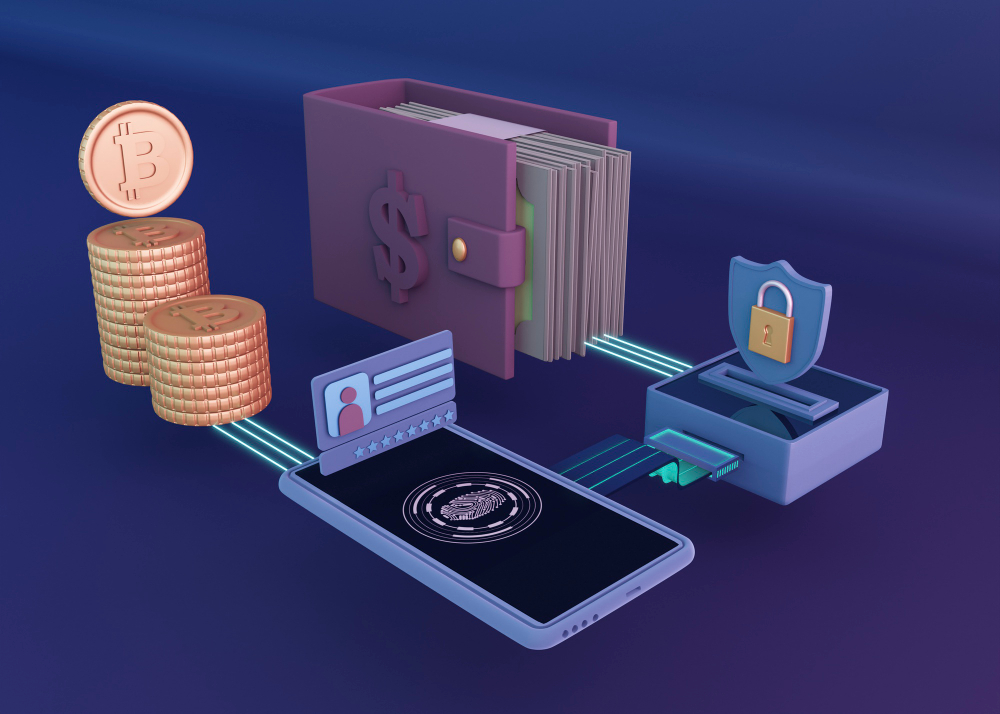
Crypto privacy in 2026 looks very different from the early “anonymous crypto” narrative. Public blockchains have become easier to analyze across wallets, bridges, exchanges, and applications, making simple transaction obfuscation far less effective than it once seemed. Privacy tools are increasingly used less to “hide activity” and more to limit how much of it can be reliably linked across systems over time, especially as blockchain analytics and cross-chain attribution techniques become more precise.
Why Privacy in Crypto Became Harder by 2026
A few years ago, keeping crypto activity separate often meant little more than using a fresh wallet. That approach gradually stopped working as blockchain analytics became better at linking behavior instead of identities. Transactions that look disconnected on the surface can still reveal consistent patterns through timing, routing habits, bridge usage, or recurring interaction with the same protocols.
Multi-chain activity added another layer of exposure. A user moving funds from Tron into Ethereum and later through an L2 trading platform may unintentionally create a traceable sequence across several infrastructures at once. The more services involved, the easier it becomes to reconstruct movement retrospectively.
This is partly why privacy conversations now extend beyond wallets themselves. When users compare a private crypto swap, attention often shifts toward how ChangeNOW or Changelly process routing, temporary transaction data, and account separation during conversions.
Some of the largest privacy leaks today come from routine behavior rather than technical mistakes:
- using one wallet across unrelated ecosystems
- combining exchange withdrawals with DeFi activity
- moving assets directly between publicly linked addresses
By 2026, privacy in crypto is shaped less by whether transactions are visible and more by how much surrounding context can be connected back to the same user over time.
The New Privacy Stack: Where Exposure Actually Happens
In early crypto markets, privacy failures were usually obvious: publishing a wallet address publicly, sending funds directly from an exchange account, or reusing the same address for years. Today, exposure more often comes from accumulation rather than single mistakes.
A user may trade NFTs on Ethereum, bridge assets into an L2 network, and later withdraw stablecoins through a centralized platform. Individually, these actions may appear low-risk. Together, they can form a recognizable behavioral pattern across multiple systems.
This changed how privacy-oriented users structure activity:
| Activity | Typical Separation Method |
| Long-term storage | cold wallet with minimal interaction |
| Active trading | separate hot wallet |
| DAO or freelance income | isolated payment wallet |
| Experimental DeFi usage | temporary wallets with limited reuse |
By 2025–2026, blockchain analytics increasingly combined transaction analysis with timing correlation, bridge activity, and off-chain metadata rather than relying only on wallet graphs. Even non-custodial activity may expose patterns through RPC requests, browser sessions, or routing behavior.
This helps explain why older privacy-focused tools such as Tor Browser and Tails remain relevant despite rapid turnover in crypto applications. They reduce parts of the data trail that on-chain privacy tools do not address.
The shift is structural rather than ideological. Privacy has effectively moved toward compartmentalized operations, where each layer is designed to avoid carrying enough information for full reconstruction on its own.
Privacy-first Wallets: What Users Actually Separate Now
Among privacy-focused users, wallets are treated as operational endpoints rather than persistent identities. The reason is structural: once transaction history accumulates, clustering models can infer wallet roles through counterparties, timing, and routing patterns.
Wallet intelligence tools now routinely classify addresses based on interaction graphs rather than identity labels. Repeated exposure to the same DEX pools, bridges, or funding sources is often enough to link activity across otherwise “separate” wallets.
Functional Separation of Wallets
Typical structure is now role-based:
- Storage: cold wallets, rarely interacting on-chain, minimal transaction graph growth
- Execution: trading and DeFi activity, high interaction density with protocols
- Income: staking rewards, DAO payouts, service payments, predictable inflow patterns
- Testing: short-lived wallets for new protocols, airdrops, higher-risk contracts
The objective is reducing graph density per wallet, not eliminating traceability entirely.
Common Privacy-oriented Wallets in Practice
Cake Wallet
Used mainly as a separation layer between BTC and privacy assets like Monero. Its key practical feature is built-in exchange routing, which reduces dependency on centralized accounts during swaps. In practice, it functions as an isolation point between private-asset flows and broader crypto activity.
Wasabi Wallet
Built around CoinJoin-based UTXO coordination, where inputs from multiple participants are aggregated into shared transactions. This reduces deterministic linkage between inputs and outputs and weakens common clustering heuristics such as change-address analysis and input ownership tracing.
Samourai Wallet
Historically associated with UTXO-level privacy techniques such as Whirlpool CoinJoin and spend-heuristic reduction. Its focus is not address reuse alone, but limiting how transaction outputs can be correlated through spending patterns and consolidation behavior.
Practical Takeaway
Privacy outcomes depend less on tool selection and more on limiting how quickly a wallet develops a readable interaction history across protocols, counterparties, and time.
Private Swaps and Routing Layer: Where Most Leakage Actually Happens
Wallet separation reduces traceability only up to a point. In practice, a significant share of attribution risk emerges during conversion events — when assets move across chains, formats, or liquidity environments. These steps concentrate metadata: routing paths, timing patterns, bridge selection, and interaction with specific liquidity sources.
Cross-chain transfers are particularly sensitive. Moving funds from Ethereum into another ecosystem via a bridge, followed by a swap into stablecoins, creates a chain of observable events that can often be reconstructed through indirect signals. Analytics systems tend to rely less on the swap itself and more on surrounding context — gas behavior, bridge usage patterns, and post-transfer activity.
This is why privacy-conscious users increasingly separate storage from routing infrastructure. Conversions are no longer treated as neutral operations, but as points where transaction context can expand.
A typical decision framework now includes:
- whether the route introduces centralized custody at any stage
- how many intermediate hops are required before settlement
- whether liquidity is sourced from fragmented pools or a single venue
- how persistent intermediate addresses or logs remain after execution
Within this context, execution design matters as much as pricing. Practical considerations around how to transfer crypto privately often center on minimizing linkable metadata across each step of the routing path rather than on the swap itself.
Private swap services sit in the middle of this stack. Platforms like ChangeNOW are commonly compared with alternatives such as FixedFloat not only on fees, but on routing architecture and how much transactional context is exposed during conversion.
The key distinction is not whether swaps can be traced in theory, but how many additional linkage signals are created during execution.
Privacy Tokens vs Infrastructure Tools: Where Protection Actually Breaks
The difference between privacy coins and privacy tooling is less about internal design and more about where each system stops working in practice. Inside a network, privacy assumptions hold relatively well. Outside it, they degrade quickly, and the break happens in predictable places.
For Monero, the protocol layer is strong by design: ring signatures, stealth addresses, and RingCT remove direct visibility of sender, receiver, and amount. The real constraint appears later, when liquidity is needed. Entry and exit routes are still heavily dependent on centralized exchanges or limited swap channels, which reintroduces identity linkage outside the chain rather than inside it.
Bitcoin-based privacy tools operate on a different axis. CoinJoin does not hide transactions; it breaks deterministic links between inputs and outputs by combining UTXOs across multiple participants. That structure works best under high participation and consistent usage patterns. It degrades when outputs are later merged, reused across identifiable flows, or when post-mix behavior becomes predictable.
The actual failure modes are fairly consistent across both systems:
- Monero: privacy weakens primarily at conversion points into and out of the network
- CoinJoin: linkage reappears through consolidation and spending behavior after mixing
- cross-system flows: routing metadata becomes sufficient to rebuild partial graphs
What this shows is that the limiting factor is not the cryptographic model itself, but the transition layer between environments. Once assets leave their native privacy context, timing patterns, counterparties, and reuse behavior often provide enough structure for clustering.
In that sense, the difference between privacy approaches is not about absolute anonymity, but about how much of that anonymity survives when the asset is forced to move through external systems.
Device-level Privacy: Where Correlation Starts Before the Chain
A recurring assumption in crypto privacy discussions is that blockchain data is the main source of exposure. In practice, many linkages are formed earlier, at the moment a transaction is signed.
Wallet activity is often surrounded by stable digital signals that do not change when addresses are rotated. IP ranges, browser storage, extension behavior, and request timing create a background pattern that remains consistent across sessions.
Individually weak signals become relevant through repetition across sessions and environments, rather than through direct data exposure.
Typical correlation points include:
- persistent browser fingerprint across wallet and trading interfaces
- RPC requests originating from stable network environments
- shared browser session artifacts between dApps and custodial platforms
- address handling behavior repeated across applications
What matters is not the presence of any single signal, but how consistently similar conditions repeat across different actions. The same device may interact with DeFi protocols and centralized exchanges under similar network conditions, allowing indirect linkage even without shared wallet addresses.
Unlike on-chain privacy, this layer is not addressed by transaction structure. It depends on separating operating environments so that unrelated activity does not converge into a single observable pattern.
Practical Privacy Stack in 2026: How Tools are Actually Combined
Privacy issues rarely appear as isolated failures. They usually emerge when multiple layers of activity start reinforcing each other, even if each layer on its own looks harmless.
A typical structure is built around separation of roles rather than tools. Capital is divided first, then routed through different environments depending on purpose. Where most setups weaken is not at the wallet level, but in the repetition of identical operational paths across those layers.
Capital Segmentation
Long-term holdings are kept inactive, while operational funds circulate through smaller wallets. This reduces accumulation of history in a single cluster, but does not prevent correlation if behavior remains consistent.
Execution Environments
Signing transactions, interacting with dApps, and accessing exchanges often happen in the same browser or device context. When this context is stable over time, it becomes a stronger identifier than the wallet itself.
Routing Layer
Swaps, bridges, and cross-chain transfers introduce intermediary steps that carry their own metadata footprint. Reusing identical routes or liquidity sources creates patterns that are easier to reconstruct than individual transactions.
Where this structure breaks in practice is usually predictable:
- repeated use of the same device/browser setup across different roles
- identical swap and bridge paths across multiple transactions
- overlap between trading activity and general browsing sessions
- concentration of all operations through a single routing habit
The key issue is not exposure of individual actions, but convergence. Once separate layers begin producing similar signals, the overall system becomes readable even without direct identity links.
What Actually Works: Constraints, not “Anonymity”
Full anonymity is rarely the right framing here. What matters in practice is how much effort it takes to connect separate pieces of activity into something coherent.
Repetition is usually the first weakness. Once the same wallets, routes, or interfaces start appearing across multiple flows, patterns form quickly, even if each action looks unrelated in isolation.
Risk increases with interaction density. Repeated use of the same services, routes, or protocols reduces ambiguity over time, even without direct identity leakage.
A more durable setup tends to avoid letting different functions overlap too much. Storage behavior, active trading, and asset conversion are easier to correlate when they consistently happen in the same operational context.
What this typically translates to in practice:
- avoiding repeated use of identical routing and swap paths
- keeping interaction patterns from becoming routine across the same services
- not concentrating storage, execution, and conversion in one behavioral flow
None of this removes attribution. It simply prevents it from becoming trivial, which is usually the real dividing line in privacy outcomes.
Closing Perspective
Privacy in crypto does not converge toward a final state. It behaves more like an ongoing negotiation between usability, liquidity access, and the amount of structure left behind by each interaction. As systems become more interconnected, isolation at a single layer stops being decisive on its own.
What ultimately defines the outcome is not the presence of specific tools, but how consistently they are used together without reintroducing repeatable patterns through routing, timing, or environment overlap. Most real-world “privacy failures” are not technical breaks, but gradual loss of separation between otherwise independent actions.
In that sense, effective privacy is less about reaching anonymity and more about maintaining enough separation that activity does not collapse into a single readable behavioral pattern.
FAQs:
- Are crypto privacy tools in this article meant to make transactions fully anonymous?
No. They mainly reduce how easily activity can be linked across wallets, services, and environments. Complete anonymity is not a realistic outcome in most real-world crypto flows. - Why do privacy leaks still happen if users use separate wallets?
Because linkage often comes from behavior, not just addresses. Repeated routing paths, shared device environments, and consistent interaction patterns can reconnect otherwise separate wallets. - Which part of the crypto stack is most exposed: wallet, swap, or device layer?
Conversion and routing layers tend to carry the most exposure, since swaps, bridges, and cross-chain transfers concentrate metadata that can be used for reconstruction. - Do privacy coins like Monero solve the problem on their own?
They reduce visibility inside their own network, but privacy weakens when funds enter or exit through centralized exchanges or when liquidity is converted into other assets. - What actually improves privacy in practice today?
Not a single tool, but separation. Reducing reuse of routes, isolating execution environments, and avoiding predictable interaction patterns across services has a stronger effect than any standalone application.
Disclaimer: This article is for informational purposes only and does not constitute financial, legal, or security advice. Cryptocurrency privacy tools operate within varying legal frameworks depending on jurisdiction, and users are responsible for ensuring compliance with applicable laws and regulations before using any mentioned technologies or services. The discussion focuses on general mechanisms and risk patterns rather than promoting or endorsing specific methods of obfuscation or non-compliant activity.